Disposable Swiffer pads work fine, but buying new ones every few weeks adds up fast. A 32-count box of Swiffer Sweeper dry refills costs about $13 (or $10 on sale) at Walmart, and a 48-count pack runs around $15 to $17 on Amazon.ca. The Swiffer sock hack skips all of that: slide an old fuzzy sock over the mop head, and you've got a reusable pad that costs nothing.
What Is the Swiffer Sock Hack?
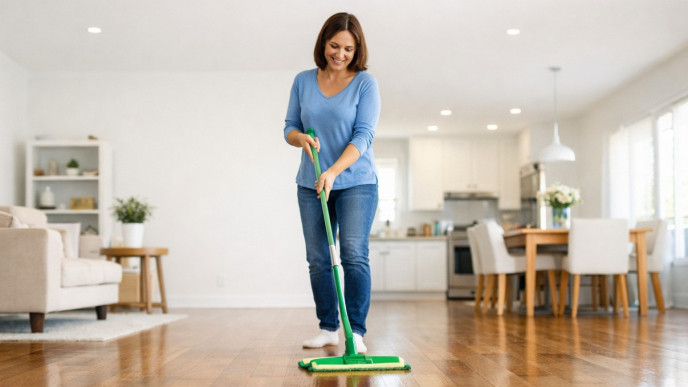
It's exactly what it sounds like. You take a sock (ideally a chenille or "fuzzy" sock), stretch it over your Swiffer Sweeper head, and use it the same way you'd use a disposable pad. The sock traps dust, hair, and debris just like the original refill, but instead of throwing it out, you toss it in the wash and reuse it.
This trick has been circulating on TikTok and Reddit for years, and it keeps coming back because it actually works. The texture of a fuzzy sock, especially chenille, picks up dust and pet hair as effectively as a flat disposable pad. In some cases, the raised fibres do a better job on textured surfaces like tile grout or laminate.
How Much Do Disposable Swiffer Pads Actually Cost?
Here's the math on what you're spending if you use disposable dry pads three times a week.
| Item | Price (CAD) | Per Pad |
|---|---|---|
| Swiffer Sweeper Dry Refills, 32-count (Walmart) | $12.97 | ~$0.41 |
| Swiffer Sweep + Mop Dry Pads, 48-count (Amazon.ca) | $14.96 to $16.99 | ~$0.31 to $0.35 |
At three pads per week, that's 156 pads a year. Even at the lower per-pad price, you're looking at roughly $50 to $60 annually on dry refills alone. Add in WetJet pads and cleaning solution, and the number climbs past $100.
The alternative to Swiffer pads? A single fuzzy sock you already own, or a $1.25 pair from Dollarama. Either way, your cost drops to nearly zero.
DIY Swiffer Pads: Choosing the Right Sock Material
Not every sock works equally well. The material matters, especially for dry dusting. Here are the three types that perform well as reusable Swiffer pads.
Chenille or Fuzzy Socks
Chenille socks (the ones with the raised bumpy texture) are the top performer for this. The small nubs of fabric reach into grout lines and textured flooring where flat pads can't. They also trap pet hair extremely well because the fibres grab and hold onto it. You can find fuzzy socks at Dollarama, Old Navy, and most dollar stores for under $2.00.
Microfibre Socks
Microfibre has a natural static charge that attracts dust particles like a magnet. Studies have shown that microfibre cloths remove significantly more bacteria and dust than cotton. If your main goal is dust pickup on smooth hardwood or laminate, a microfibre sock is a strong choice for a fuzzy sock Swiffer setup.
Large Cotton Crew Socks
An old pair of men's cotton crew socks will work in a pinch, but cotton is better suited for wet mopping than dry dusting. The flat weave doesn't trap fine dust as well as chenille or microfibre, so save these for when you're spraying cleaner on the floor.
How to Use a Sock as a Swiffer Pad (Step by Step)
The standard Swiffer Sweeper head measures about 10 inches by 4.5 inches. Most adult-sized fuzzy socks stretch to 11 or 12 inches, which means they fit snugly over the head without clips or modifications.
- Slide the sock on. Pull the sock over the Swiffer Sweeper head so it covers the entire bottom surface. The elastic opening should grip around the back of the head to keep it in place.
- Dry dust as usual. Use the sock-covered mop exactly the same way you'd use a disposable dry pad. The texture of the fabric will trap hair, dust, and crumbs.
- Flip halfway through. Once one side of the sock gets dirty, rotate it to use the cleaner side. You get double the coverage before needing to wash.
- Toss in the wash. When you're done, shake the heavy debris into the bin and throw the sock in the laundry. It's ready to reuse next time.
DIY Swiffer Wet Jet Pads: The Wet Mopping Version
If you want to reuse Swiffer mop equipment for wet mopping too, you can do that without buying WetJet pads or solution refills. Instead of using the built-in spray, put a damp sock on the Sweeper head and spray your preferred floor cleaner directly onto the floor. Then mop as usual.
One caution: if you try to slide a sock over a WetJet (rather than the standard Sweeper), the sock may block the spray nozzles. This trick works most reliably on the basic Swiffer Sweeper model.
Homemade Swiffer Solution
If you want to skip the commercial cleaning solution entirely, a simple homemade Swiffer solution does the job on most floors. Mix one cup of distilled water with one cup of isopropyl alcohol (70%) and two drops of dish soap. The distilled water prevents mineral buildup, and the alcohol evaporates quickly so your floors don't stay wet.
A note on vinegar: You'll see vinegar-based DIY floor cleaner recipes everywhere online, but the National Wood Flooring Association warns that vinegar can dull the finish on hardwood floors over time. If you have hardwood, stick to the alcohol-based recipe above or use a cleaner specifically designed for wood floors.
Other No-Sew Alternatives to Swiffer Pads
Socks are the simplest option, but they're not the only thing that works as homemade Swiffer pads.
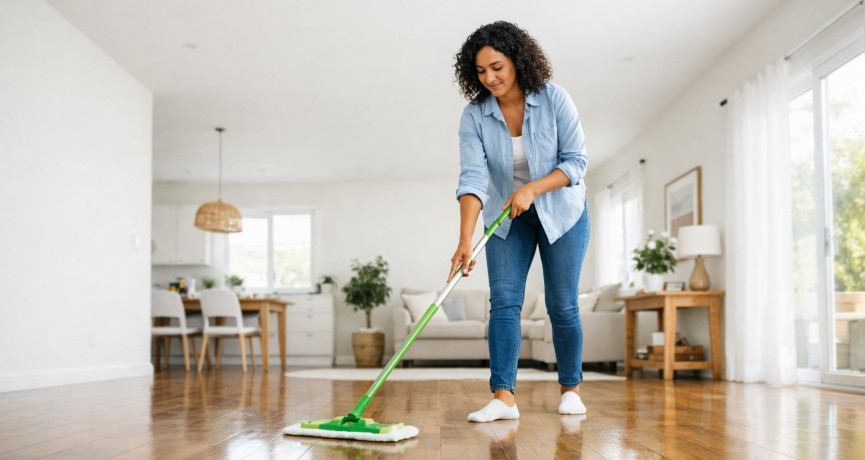
- Microfibre cloths: A standard microfibre cleaning cloth can be tucked into the corner holes of a Swiffer Sweeper head. It stays put better than a sock on some models, and microfibre is easy to wash hundreds of times.
- Old washcloths: Similar to cotton socks, these work for wet mopping. Dampen the cloth, drape it over the head, and go.
- Fleece scraps: If you have old fleece pajamas or a fleece blanket that's past its prime, cut a piece roughly 12 by 6 inches and tuck it around the mop head. Fleece has a similar dust-trapping texture to chenille.
How to Clean Your Reusable Swiffer Pads
To keep your DIY pads working well wash after wash:
- Shake first. Take the sock outside and shake the heavy dust and hair into the bin before it goes in the laundry.
- Use a mesh laundry bag. This keeps your cleaning socks separate from your regular clothes and prevents floor grit from spreading through the wash.
- Skip the fabric softener. Fabric softener coats fibres and reduces the static charge that makes microfibre effective at picking up dust. If you're using chenille or microfibre socks, wash them with detergent only.
Save Money on Swiffer Refills: The Bottom Line
- A reusable sock costs nothing if you already have one in the drawer, or $1.25 if you pick up a pair at a dollar store.
- Either way, it replaces $50 to $60 worth of disposable dry refills per year, and a single sock lasts for hundreds of washes.
- You're also keeping 150+ non-biodegradable pads out of Canadian landfills annually, which is a solid side benefit.
- That math alone makes the Swiffer sock hack one of the simplest money-saving moves for any household.
Frequently Asked Questions
Does the Swiffer sock hack work on the WetJet?
You can slide a sock over a WetJet head, but it may block the spray nozzles. For wet mopping, it's easier to use the standard Swiffer Sweeper with a damp sock and spray your floor cleaner directly onto the floor instead.
Will a sock scratch hardwood floors?
No. Soft materials like cotton, chenille, and polyester are gentle on all floor types, including hardwood and laminate. A sock is actually softer than some of the scrubby disposable pads sold for textured surfaces.
Can I wash my Swiffer socks with regular laundry?
You can, but it's better to use a mesh laundry bag to keep floor debris from transferring to your clothes. Wash with regular detergent and skip the fabric softener, which can reduce dust-trapping effectiveness on microfibre.
How often should I replace a reusable Swiffer pad?
A quality chenille or microfibre sock holds up for hundreds of washes. Replace it when the fabric starts to thin out or the elastic no longer grips the mop head snugly. Most people find one pair lasts well over a year of regular use.